





The issue of the use of linear barriers within a fire smoke detection system has always been controversial: between those who claim to install a barrier on a loop and those who instead supply 24V, we try to clarify and give a definitive answer to avoid committing inaccuracies in the construction of a system.
Technological evolution in the firefighting world has led to the advent of linear barriers that integrate directly on the loops of the plant, from which they also draw the 24V power supply.
This new type of barrier could seem to be the best solution in terms of economic convenience and time savings in the execution of the system: in fact, just the loop cable is enough to have both the signals and the power supply.
However, it’s not as simple as that.
In fact, a choice made based on economic savings does not take into account real installation factors so a loop barrier can never function correctly.
Let’s understand why.
As we have said, the linear barrier is powered by loops, simplifying the work from the point of view of power, cables, etc..
So far, everything is fine, but one fundamental aspect must be taken into account, otherwise there will be problems with the system!
What must be considered when using a linear barrier powered on the loop is that it must be correctly dimensioned to be able to withstand the electrical load of all the components managed.
Otherwise, the loop will fail, generating a disruption.
As if that were not enough, it is also necessary to provide a current margin at the service of the barrier and all its compensations, due to misalignment, eddy light sources, etc.
Last but not least, citing the reference standard UNI 9795, we recall that the maximum coverage of a linear smoke barrier is equivalent to a single fire zone and therefore no more than 1600 square metres.
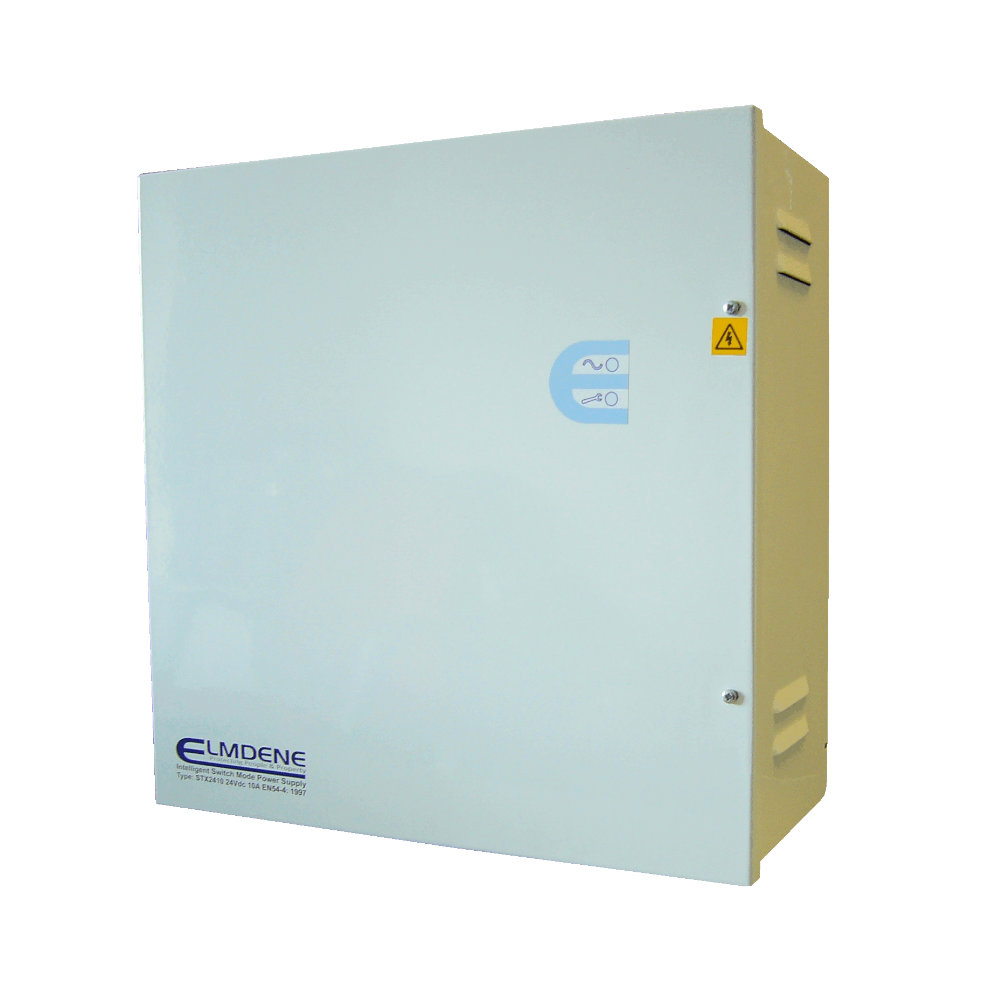
This means that each barrier must have its own dedicated power box, as in the event of a fault it is not allowed to lose more than one fire zone.
Therefore, by using the barriers on loops it is necessary to pay close attention to the amount of them on the single loop and to the division into zones of the system itself, moreover without security that the system holds.
For these reasons, we can definitively say that the barriers powered by loops, despite their technical goodness, are not the best solution in a smoke detection system.
As fire specialists, we know that the most appropriate solution you can use is the 24V powered linear smoke barriers that you can find in our FireFocus range: Reflection Linear Barriers and TX-RX Linear Barriers.
Thanks to our linear barriers powered at 24V, you will be sure not to have failures on the loop such as to create disruptions and you will be able to avoid the complicated calculations of electrical margins, which are instead necessary in the case of barriers powered on loops.
The linear smoke barriers powered at 24V of the FireFocus range
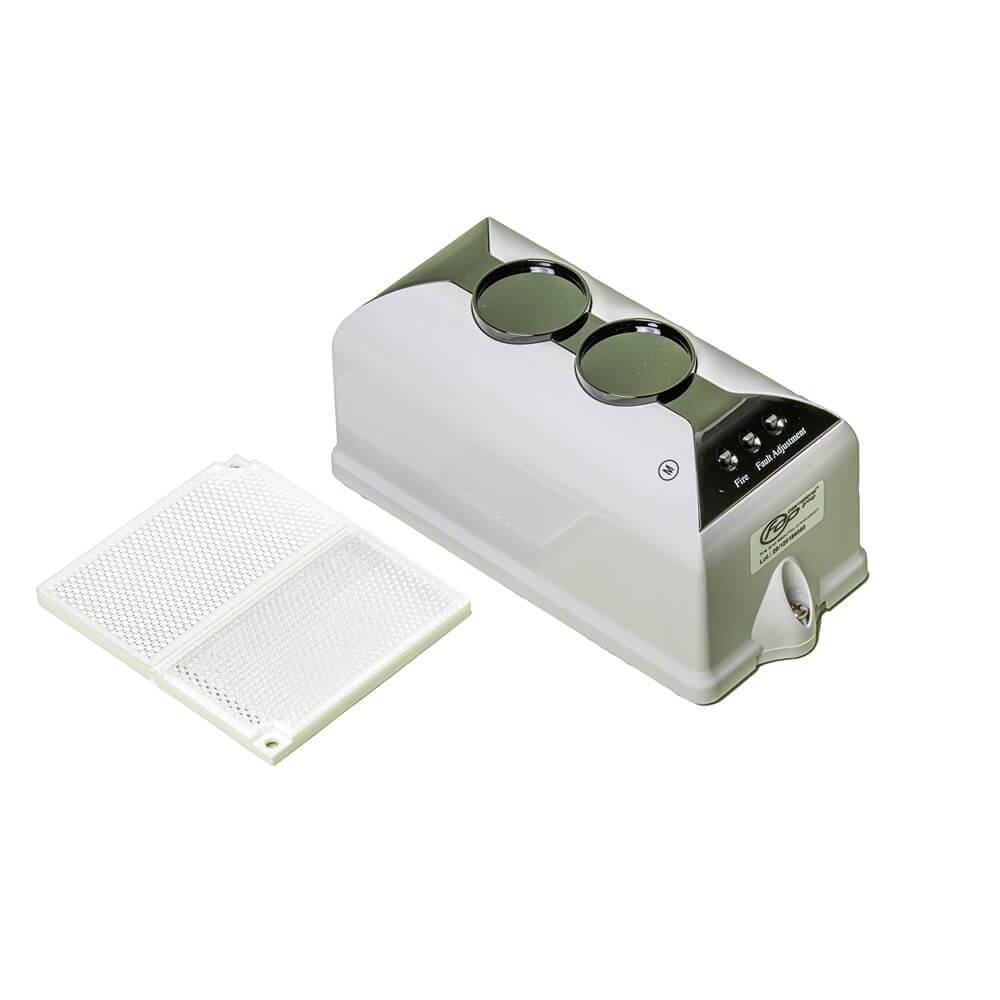
Reflective Smoke Linear Barrier
- reflective smoke linear barrier, infrared
- consisting of 1 transmitter-receiver unit and 1 prism reflector
- capacity 8-100m, with self calibration
- suitable for industrial premises
- optical filter for testing and alignment
- certified EN54-12 CPD
TX-RX linear smoke barrier
- linear infrared smoke barrier consisting of a transmitter and a receiver
- flow rate 5-100m
- RS-485 connection
- 1 alarm relay output
- 1 fault relay output
- certified EN54-12 CPD, VdS